Pièce en argent Faune canadienne : Jument et poulain de l’île de Sable 2006 | Monnaie royale canadienne
Related products
Procurez-vous dès aujourd’hui la pièce en argent Faune canadienne : Jument et poulain de l’île de Sable 2006 et faites croître votre patrimoine !
CARACTÉRISTIQUES DE LA PIÈCE
- Expédiée individuellement dans un emballage de protection
- Composée de 0,90 once d’argent pur 9999
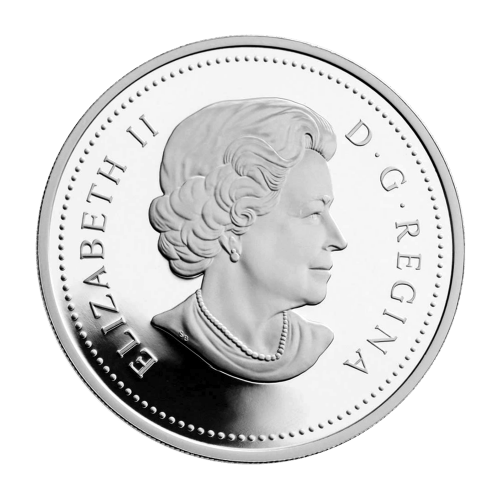
- Avers : Présente une effigie de Sa Majesté la Reine Élisabeth II.
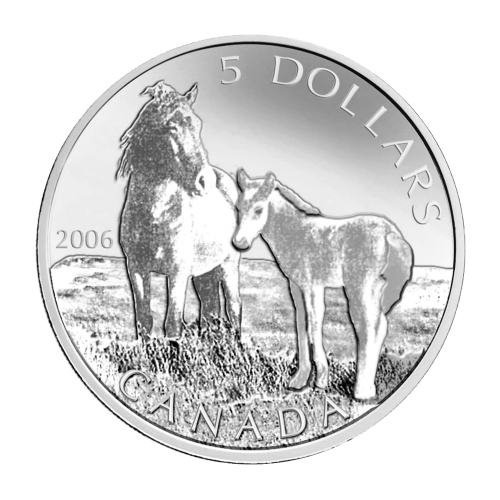
- Revers : Présente une jument de l’île de Sable accompagnée de son jeune poulain à proximité.
Cette pièce spectaculaire rend hommage au cheval de l’île de Sable. Cet adorable et petit équidé ne se trouve, au Canada, que sur cette île en forme de croissant, située à environ 300 kilomètres au sud-est des côtes de la Nouvelle-Écosse. L’île de Sable — ou « île de Sable » en référence à l’abondance de cette substance granuleuse et abrasive — a été transformée en pâturages plus hospitaliers grâce à l’implantation de l’herbe de sable (marram grass) sur les 31 km² de territoire. Cette initiative témoigne des efforts de conservation monumentaux entrepris par le gouvernement de la Nouvelle-Écosse.
Le revers présente une jument de l’île de Sable accompagnée de son poulain, tout près d’elle. Cette pièce est en avance sur son temps, tant le niveau de détail est exceptionnel, avec des effets d’ombrage et de texture qui donnent vie à l’image. L’œuvre de l’artiste Christie Paquet est sublimée par le contraste entre les détails givrés de la pièce et sa finition ultra-caméo profonde.
L’avers illustre l’effigie contemporaine de Sa Majesté la Reine Élisabeth II, réalisée par Susanna Blunt, sur un champ de pièce vierge. La finition épreuve met en valeur cette représentation grâce à un contraste saisissant entre les lignes nettes et la brillance de la pièce.
À PROPOS DE LA MONNAIE ROYALE CANADIENNE
La Monnaie royale canadienne est connue pour être l'une des monnaies les plus réputées au monde. La succursale d'Ottawa de la Monnaie royale a ouvert ses portes en 1908 et a été rebaptisée Monnaie royale canadienne en 1931 lorsque le contrôle a été transféré au gouvernement canadien. Ses normes élevées d'excellence et de qualité lui ont permis d'être la première raffinerie à fabriquer des pièces d'investissement en or d'une pureté de 9999 en 1982, ainsi que la première à atteindre une pureté d'or de 99999 en 1998.
