Pièce d'argent en circulation Dollar de la paix Année aléatoire | Monnaie des États-Unis
Related products
La loi Pittman de 1918 demandait à la Monnaie américaine de fondre jusqu'à 350 000 000 dollars d'argent en lingots et d'utiliser le produit de la fonte pour acheter des lingots afin de frapper un nombre équivalent de pièces. Les lingots fondus ont été vendus à l'Angleterre à 1 $ l'once, puis l'argent nouvellement extrait a été acheté dans les mines d'argent américaines à 1 $ l'once. Ce prix était supérieur au prix de vente de l'argent sur le marché et constituait une subvention fédérale à l'industrie minière de l'argent. Il semble que le copinage ne soit jamais démodé !
Peu après l'adoption de la loi Pittman, un mouvement commence à émettre une pièce commémorant la paix après la Première Guerre mondiale. Il a été dit qu'une telle pièce de la paix devrait être « émise en de telles quantités qu'elle ne deviendrait jamais rare ».
CARACTÉRISTIQUES DE LA PIÈCE
- Expédiée individuellement dans un emballage de protection
- Composée de 0,7734 once d'argent fin à 900
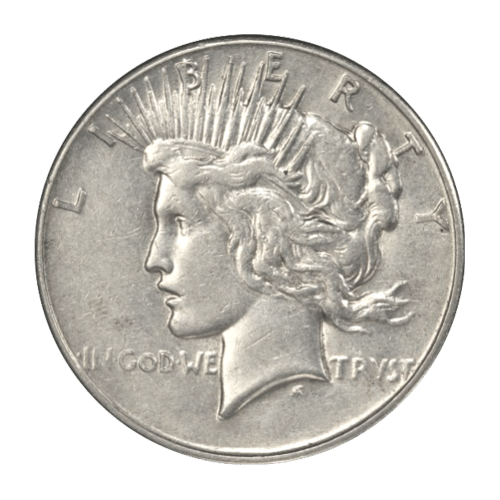
- Revers : contient une représentation du profil gauche de Dame Liberté, les mentions « LIBERTY » et « IN GOD WE TRUST », ainsi que l'année d'émission
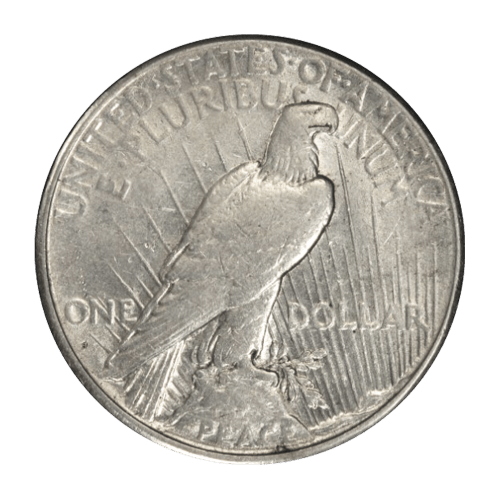
- Avers : contient une représentation complexe d'un aigle américain perché au sommet d'un rocher tenant un rameau d'olivier tandis que le soleil se lève dans le champ de la pièce, ainsi que la mention « UNITED STATES OF AMERICA », « E PLURIBUS UNUM », « ONE DOLLAR » et « PEACE »
La production du dollar Morgan a repris en 1921, conformément à la loi Pittman, et un concours a été organisé pour trouver son remplaçant. Le gagnant du concours fut Anthony de Francisci, qui utilisa sa femme Teresa comme modèle. L'avers présente Dame Liberté portant une couronne censée ressembler à celle de la Statue de Liberté. La fenêtre du studio était ouverte pendant que Francisci travaillait, ce qui explique les cheveux de Dame Liberté volant au vent sur cette pièce.
Le dollar Paix a été frappé entre 1921-1928, ainsi qu'en 1934-1935. Il s'agit de la dernière production régulière du dollar frappé dans l'argent. Les dollars Paix étaient produits avec 90 % d'argent et 10 % de cuivre afin de se conformer à la loi sur la frappe de monnaie de 1837. En 1962, un certificat d'argent a été partiellement racheté contre un dollar Morgan non circulé, ce qui a déclenché une vague d’intérêt pour le rachat de certificats d'argent au Trésor américain. La demande était énorme, certains faisaient la queue en poussant des brouettes. Plusieurs millions de dollars Morgan et Paix hors circulation ont finalement été découverts dans des coffres et vendus au public.
Ces Dollars de la Paix sont des pièces de circulation. La pièce montre des traces d'usures ou d'abrasion sur de nombreux points. Nous avons un nombre limité de ces exemplaires.
À PROPOS DE LA MONNAIE DES ÉTATS-UNIS
Créé en 1792 en tant que premier hôtel des monnaies des États-Unis, la Monnaie des États-Unis est un bureau du département du Trésor, chargé de la production des pièces de monnaie ayant cours légal. La Monnaie des États-Unis a la mission de servir les Américains en tant que seul fabricant et distributeur de pièces de monnaie en circulation. La Monnaie américaine produit également des pièces commémoratives pour les collectionneurs, des pièces d'investissement en argent et en or pour les investisseurs (telles que les populaires séries Aigle et Bison), ainsi que des médailles du Congrès.
