Pièce 5 onces d'argent 50 $ L'Avro Arrow plaqué or 2021 Monnaie royale canadienne


Related products
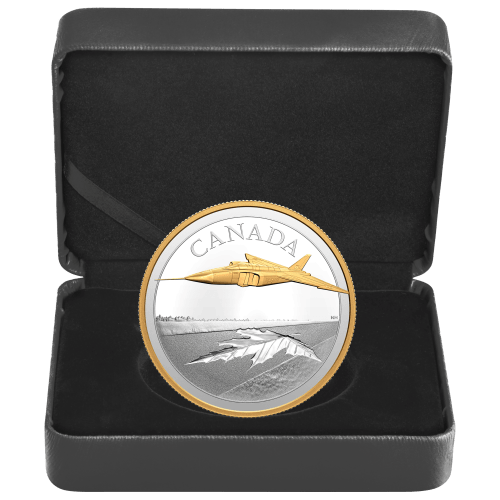
Voici une merveille de fabrication canadienne qui était en avance sur son temps. Conçu pour voler plus haut et plus vite que tout autre avion dans les années 1950, l'Avro CF-105 Arrow a propulsé le Canada à l'avant-garde des technologies d'aviation. Malgré l'annulation du projet en 1959, l'héritage de l'Arrow perdure encore. Sur cette pièce de 5 onces d'argent pur, la Monnaie royale canadienne a imaginé l'avion de chasse supersonique fendre le ciel une fois de plus, alors que sur le sol, son ombre représente tous ceux qui ont porté l'esprit d'innovation du Canada vers de nouveaux sommets.
Un symbole d'innovation et d’ingéniosité canadien, l'Avro Arrow vit dans le coeur de son peuple et sur cette SUBLIME pièce d'argent fin de 5 onces. Passez votre commande dès maintenant !
CARACTÉRISTIQUES DE LA PIÈCE
- L'AVRO ARROW ! Célébrez l'innovation et l’ingéniosité canadienne avec cette pièce 5 onces d'argent qui met l'accent sur l'histoire de l'Avro CF-105 Arrow.
- UN HOMMAGE AUX INNOVATEURS ! Au revers de la pièce, la représentation de l'Arrow de la Monnaie royale canadienne projette une ombre d'une forme unique. C'est un puissant hommage aux Canadiens qui ont conçu et construit l'avion de chasse le plus poussé de son époque.
- UN PLAQUAGE EN OR ! La représentation de la Monnaie royale canadienne finement gravée de l'Arrow est rehaussée d'un plaquage d'or sélectif qui lui donne un magnifique éclat. Cette caractéristique haut de gamme allie le meilleur des deux mondes, l'or et l'argent, créant un contraste frappant.
- 5 ONCES D'ARGENT FIN ! Votre pièce est conçue dans 5 onces d'argent pur à 99,99 % et contient une finition épreuve numismatique ressemblant à un miroir pour une brillance maximum.
- UN FAIBLE TIRAGE ! Seulement 1 000 exemplaires de ces pièces sont disponibles dans le monde.
- UN CERTIFICAT NUMÉROTÉ ! La Monnaie royale canadienne certifie l'authenticité de toutes ses pièces de collection.
- AUCUNE TPS/TVH
LE MOTIF
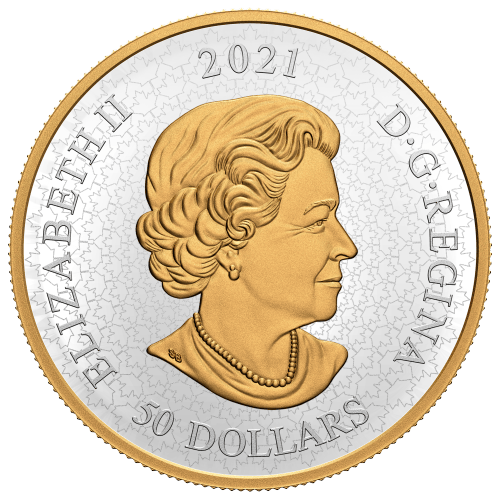
Dessiné par l'artiste canadien Neil Hamelin, le revers de votre pièce est un hommage artistique au plus célèbre avion canadien, l'Avro CF-105 Arrow. Il semble que l'avion de chasse supersonic plaqué or soit trop rapide et trop puissant pour être contenu au revers, où une perspective unique met en valeur son profil fin. Sur le terrain d’atterrissage, l'ombre en forme de feuille d'érable rend hommage aux innovateurs derrière la conception et la construction de l’emblématique Arrow, qui fût et reste la fierté du Canada. L'avers contient le motif d'une feuille d'érable et l'effigie de Sa Majesté, la reine Elizabeth II selon Susanna Blunt.
FLYING HIGH
En 1953, l'entreprise A.V. Roe Canada reçoit une commande pour développer un intercepteur supersonic qui renforcerait la défense aérienne de l'Amérique du Nord pendant la Guerre froide. La production commence dans les locaux de l'entreprise à Malton, en Ontario et le 4 octobre 1957, le premier Arrow immatriculé RL-201 est dévoilé en grande pompe. Après un premier vol réussi le 25 mars 1958, quatre autres prototypes ont été créés, en plus de l'Arrow Mk. 2. L'Arrow bimoteur aux ailes en delta a été qualifié de triomphe technologique ; il fût le premier avion en série à adopter un système de commandes de vol électronique alors que le nouveau turboréacteur Iroquois PS-13 lui aurait permis d'atteindre une vitesse de vol supersonique, dépassant de deux fois la vitesse du son. Mais, le programme fût annulé le 20 février 1959. L'ordre fût donné de détruire tous les prototypes, les modèles, les plans et les équipements, bien qu'il reste quelques vestiges que l'on peut trouver dans des musées canadiens.
DID YOU KNOW
- De nombreux ingénieurs canadiens ayant travaillé au projet Arrow ont, par la suite, joué un grand rôle dans d'autres projets d'aviation et au sein du programme spatial américain.
- Quelle est la plus grande pièce restante de l'Avro Arrow ? Le nez du RL-206, qui était achevé à 98 % lorsque le projet Arrow fût annulé. Lorsque les avions Arrow furent démantelés en 1959, ce morceau s'est retrouvé à l'Institute of Aviation Medicine de Toronto où il a été utilisé comme caisson pneumatique. En 1965, il fût offert à la Collection nationale de l'aéronautique, devenu le Musée national de l'aviation en 1982 et maintenant appelé le Musée de l'aviation et de l'espace du Canada à Ottawa. Le nez s'y trouve encore aujourd'hui.
- Plusieurs autres vestiges de l'Arrow ont été retrouvé ces dernières années, y compris plusieurs modèles récupérés au fond du lac Ontario.
À PROPOS DE LA MONNAIE ROYALE CANADIENNE
La Monnaie royale canadienne est connue pour être l'une des monnaies les plus réputées au monde. La succursale d'Ottawa de la Monnaie royale a ouvert ses portes en 1908 et a été rebaptisée Monnaie royale canadienne en 1931 lorsque le contrôle a été transféré au gouvernement canadien. Ses normes élevées d'excellence et de qualité lui ont permis d'être la première raffinerie à fabriquer des pièces d'investissement en or d'une pureté de 9999 en 1982, ainsi que la première à atteindre une pureté d'or de 99999 en 1998.
