Pièce 1/4 once d'argent Épreuve numismatique Libertad mexicaine 2023 | Monnaie mexicaine
Related products
La pièce en argent Libertad mexicaine jouit d'une popularité durable parmi les investisseurs cherchant à diversifier leurs avoirs avec une pièce unique et bien conçue. Diversifiez vos avoirs dès aujourd'hui en y ajoutant une pièce 1/4 once d'argent épreuve numismatique Libertad mexicaine 2023 !
CARACTÉRISTIQUES DE LA PIÈCE
- Expédiée individuellement dans un emballage de protection
- Composée de 1/4 once d'argent fin à 999
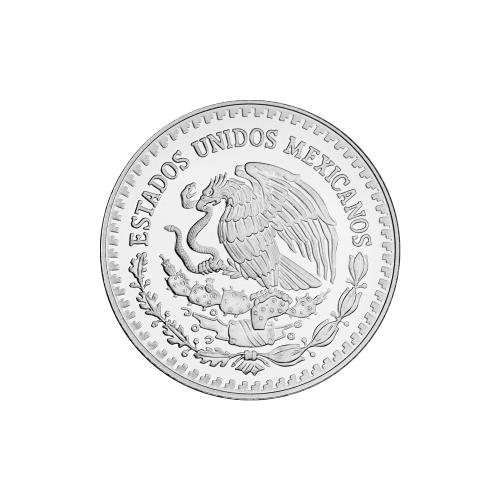
- Avers : Présente un relief du blason national du Mexique, entouré de neuf itérations des différentes armoiries nationales du Mexique, ainsi qu'une couronne de laurier avec la mention « ESTADOS UNIDOS MEXICANOS »
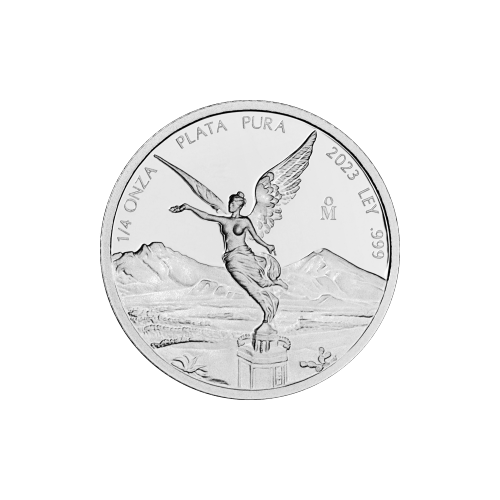
- Revers : Présente le motif de l'Ange de l'indépendance de Mexico, la victoire ailée, sculpté en relief, sur un fond composé de deux volcans mexicains : le Popocatépetl et l'Iztaccihuatl, ainsi que le cachet de la Monnaie mexicaine, et le poids et la pureté du métal
- Finition épreuve numismatique
La pièce d'investissement en argent Libertad mexicaine jouit d'une popularité durable auprès des investisseurs qui cherchent à diversifier leurs avoirs avec une pièce unique et bien conçue. Les Libertads mexicaines sont des pièces d'argent et d'or frappées en quantités extrêmement faibles par rapport à d'autres pièces d'investissement en or, augmentant à la fois la demande et les primes. En plus de leur faible tirage, le motif attrayant de la statue de la victoire ailée ajoute un aspect d'objet de collection qui peut également être apprécié par les numismates.
L'avers présente le monument de l'indépendance, l'Ange de l'Indépendance, qui trône au cœur de la ville de Mexico. La colonne de la victoire de l'indépendance mexicaine ornée d'un motif en relief sculptural, portant la statue ailée de la victoire, trône au cœur de la ville de Mexico. Le monument rend hommage à la déesse romaine de la victoire, Victoria, sans négliger aucun détail. À l’arrière-plan, se trouvent les volcans Popocatépetl et Iztaccíhuatl, respectivement deuxième et troisième plus grands volcans du pays.
Ces deux structures volcaniques occupent un place importante dans la mythologie aztèque et dans l'histoire du Mexique. Popocatépetl était un redoutable guerrier à qui la fille de l'empereur, Iztaccíhuatl, lui avait été promise en mariage une fois la bataille gagnée, afin d'accroître la férocité et la détermination du guerrier. Croyant qu'il ne reviendrait pas, l'empereur annonça à sa fille que Popcatépetl était mort à la guerre, ce qui conduit Iztaccíhuatl à mourrir de chagrin. Après son retour triomphal, l'intrépide guerrier retrouva sa défunte épouse et l'enterra. Sa forme est restée celle de la montagne d'Iztaccíhuatl, ou la Mujer Dormida, « la femme endormie ». La légende du revers de la pièce indique son poids, sa pureté et l'année d'émission, en espagnol. À ce jour, Popocatépetl reste un volcan actif contrairement à l'Iztaccíhuatl.
Au centre du revers, un aigle est représenté au sommet d'un cactus de figue de Barbarie en train de dévorer un serpent. Les images qui l'entourent sont les différentes phases des armoiries mexicaines dans le sens des aiguilles d'une montre ainsi que la mention « Estados Unidos Mexicanos ». Le revers rend également hommage à l'héritage aztèque de la nation. Il a été prophétisé que l'ancienne civilisation s'installerait autour de l'endroit où l'image est devenue réalité. La ville de Mexico est le lieu où cette prophétie se serait matérialisée.
À PROPOS DE LA MONNAIE MEXICAINE
Fondée en 1535, La Casa de Moneda de Mexico, ou Monnaie mexicaine, est la plus ancienne monnaie des Amériques et l'une des plus anciennes monnaies du monde, le peso d'or mexicain étant une relique durable et hautement collectionnée du passé. Avec une durée de vie opérationnelle de plus de 400 ans, on peut affirmer sans se tromper que la Monnaie nationale du Mexique a une réputation bien établie et bien acquise, travaillant aux côtés de la prestigieuse Banco de México (la banque mexicaine) pour frapper de l'argent en circulation pour le peuple mexicain. Les pièces d'investissement d'or et d'argent Libertad ont contribué au succès de la Monnaie.
