Pièce 1/10 once d'argent Sainte-Hélène Spade Guinée 2022 | Compagnie des Indes orientales
Related products
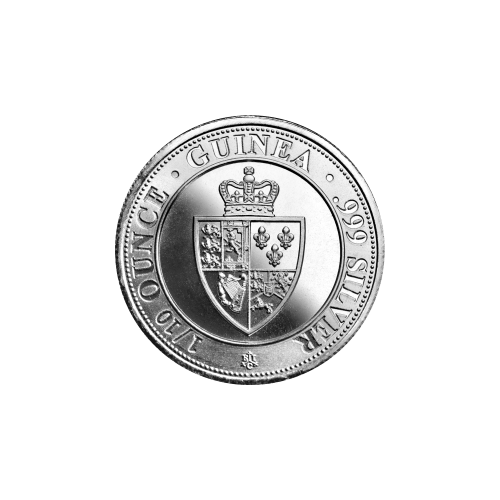
This is a beautiful 1/10 oz version of the St Helena Spade Guinea silver coin featuring the shield from the 1787 issuing of The Guinea. The Guinea was originally a gold coin minted in Great Britain between 1663 and 1814 and became well known for its purity and reliability. It was the first gold coin to be struck using a machine in Britain. The name Guinea was termed from the origin country of the gold first used to produce these coins.
COIN HIGHLIGHTS
- Ships individually in plastic flip sleeve: Multiples of 50 ship in tube
- Consisting of 1/10 oz 999 Fine Silver
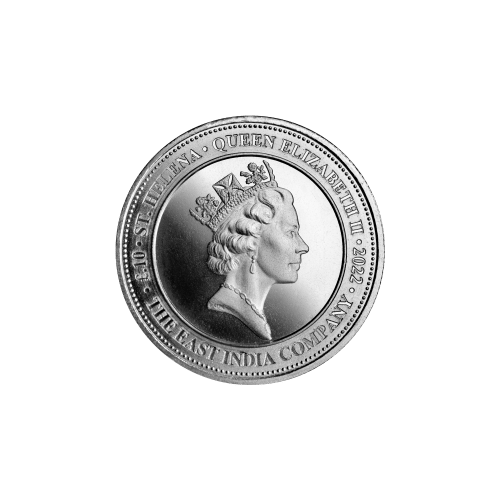
- Obverse: Features the effigy of Queen Elizabeth II designed by Raphael Maklouf as well as the issuing country, year, and legal tender value
- Reverse: Features the Spade Guinea Shield design based on the 1787 version of the gold guineas as well as the coin weight, purity, East India Company mint mark, and inscription "GUINEA"
- The Guinea is still used today to purchase horses
This 999 silver coin was created as a modern interpretation of the gold coin issued by the United Kingdom in the late 18th century when the empire was at the height of its power. As the design incorporated a spade shield on the coin, along with the gold received from modern-day Guinea during that period, the name "Spade Guinea" was befitting.
The spade shield itself contains the Royal Arms of King George III, which incorporates four seals: the Three Lions of England, the Harp of Ireland, the Lion of Scotland, and the French Fleur de Lis, as well as the coat of arms of the House of Hanover.
This design contains distinctly African influence in its look and was used on many British coins during the late 18th and 19th centuries. It is believed that this design was chosen to pay homage to the British Empire's growth and influence on the continent of Africa during this period.
ABOUT SAINT HELENA
The tiny, isolated Island of Saint Helena is an unlikely candidate as one of the most significant and influential nations in terms of global trade. Yet, looking back and examining the collective history, St. Helena is an integral component of worldwide trade and commerce. The Island, which spans an area of 47 square miles, was seen as an oasis by explorers and conquerors such as the Dutch, Portuguese, and English, all vying for control of the crucial port. In 1658 the British claimed the Island by making it a fortress and a hub for lucrative expeditions to India, China, and the rest of the Eastern world. The trading hub has now reached unprecedented heights of success, accounting for half of the world’s trade, establishing a monopoly in cotton, silk, salt, spices and tea, among many others, contributing to the vast and enormous wealth of the British empire. The Island, which remains a British colony to this day, was a vital component in the rise of the British empire.
