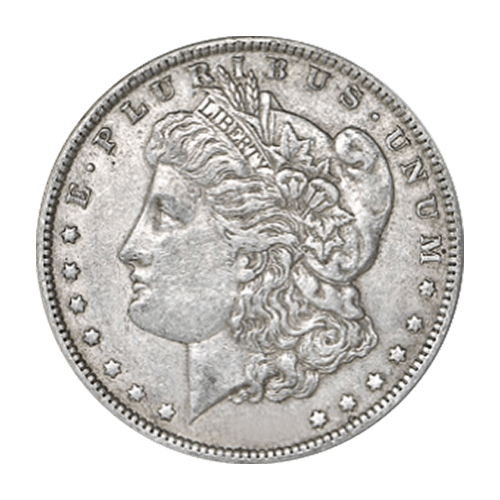

Pièce d'argent XF Silver Dollar Morgan 1878-1904 | Monnaie des États-Unis
Related products
Le dollar Morgan a été créé en réponse à l'adoption de la loi Bland-Allison de 1878. Après la dépression de cinq ans qui a suivi la Crise bancaire de 1873, les Silverites ont proposé un standard bimétallique qui verrait l'argent frappé en dollars selon l'ancien ratio or/argent de 16:1. Les Silverites pensaient que cette loi aiderait à regonfler le dollar après la Crise bancaire de 1873.
CARACTÉRISTIQUES DE LA PIÈCE
- Expédiée individuellement dans un emballage de protection
- Composée de 0,7734 once d'argent fin à 900
- Avers : contient une représentation d'un portrait de profil de Dame Liberté entourée de 13 étoiles ainsi que l'inscription « E PLURIBUS UNUM »
- Revers : présente la gravure d'un pygargue à tête blanche tenant un tas de flèches et une branche d'olivier, ainsi que le nom du pays d'émission, la valeur ayant cours légal et la devise « IN GOD WE TRUST »
George T. Morgan, un assistant graveur à la Monnaie de Philadelphie, a produit le motif gagnant pour le dollar, d’où son nom. Anna Willess Williams a posé pour Morgan dans le rôle de Dame Liberté. Il a déclaré que son profil était le plus parfait qu'il ait jamais vu.
Le Dollar Morgan en argent a été frappé de 1878 à 1904, avec une reprise de la production pendant un an en 1921. Les Dollars Morgans étaient produits avec 90 % d'argent et 10 % de cuivre afin de se conformer à la loi sur la frappe de monnaie de 1837. En 1962, un certificat d'argent a été partiellement racheté contre un dollar Morgan non-circulé, ce qui a déclenché une vague d’intérêt pour le rachat de certificats d'argent au Trésor américain. La demande était énorme, certains faisaient la queue en poussant des brouettes. Plusieurs millions de dollars de la Paix et Morgan non circulés ont finalement été découverts dans des coffres et vendus au public.
Les dollars Morgan 1921 ont nécessité la création de nouvelles matrices par George Morgan, les anciennes ayant été détruites en 1910. Le dollar Morgan n'a été produit que pendant un an avant d’être remplacé par le dollar de la Paix.
À PROPOS DE LA MONNAIE DES ÉTATS-UNIS
Créé en 1792 en tant que premier hôtel des monnaies des États-Unis, la Monnaie des États-Unis est un bureau du département du Trésor, chargé de la production des pièces de monnaie ayant cours légal. La Monnaie des États-Unis a la mission de servir les Américains en tant que seul fabricant et distributeur de pièces de monnaie en circulation. La Monnaie américaine produit également des pièces commémoratives pour les collectionneurs, des pièces d'investissement en argent et en or pour les investisseurs (telles que les populaires séries Aigle et Bison), ainsi que des médailles du Congrès.
