Pièce 5 kilos d'argent The Dance screen (The Scream Too) 2015 | Monnaie royale canadienne

Related products
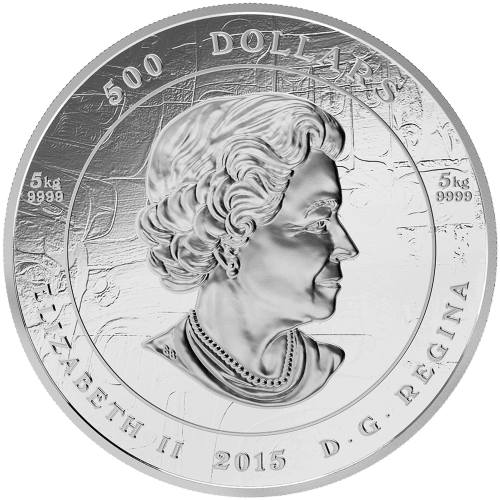
A masterpiece crafted in five kilograms of fine silver! Order today!
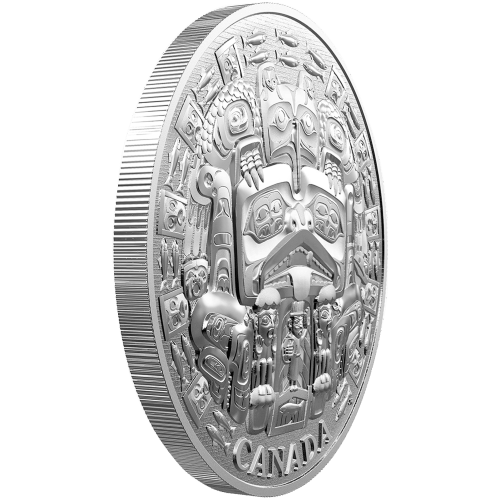
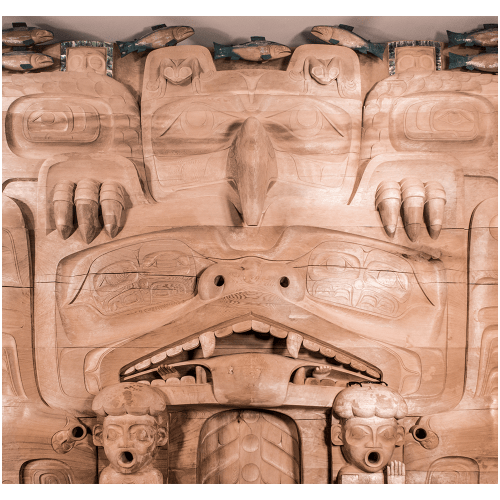
The Dance Screen (The Scream Too) est une sculpture monumentale en bois de cèdre rouge qui mesure trois mètres de haut, cinq mètres de large et pèse environ 1 360 kg. Ce projet ambitieux a été réalisé par James Hart, maître sculpteur haïda et chef du clan de l'aigle. Il représente les écrans de danse qui étaient traditionnellement utilisés comme toile de fond lors des danses cérémonielles haïda.
Il s'agit du seul écran de danse de ce type et il a une histoire urgente à raconter : la diminution de la population de saumons sauvages et le rôle critique qu'elle joue dans l'écosystème. Diverses figures des histoires haïdas, en particulier celles qui dépendent du saumon pour leur survie, ont été rassemblées dans ce motif - castor, corbeau, aigle, grenouilles, orques, saumon, peuple du saumon et chaman, avec Mère Ourse au centre du dessin. Ensemble, ils appellent le spectateur à prendre conscience de la situation critique du saumon et à honorer son importance pour la vie le long de la côte nord-ouest du Pacifique.
Ce chef-d’œuvre fera parler de lui dans votre collection pendant des années ! Passez votre commande dès aujourd'hui !
CARACTÉRISTIQUES DE LA PIÈCE
- UN CHEF-D’ŒUVRE FAÇONNÉ DANS CINQ KILOGRAMMES D'ARGENT FIN ! La quatrième pièce de 5 kilos d'argent de la Monnaie royale canadienne, d'une pureté de 99,99 %.
- UN EXPLOIT REMARQUABLE DANS LA FRAPPE DE LA MONNAIE ! Cette œuvre d'art exquise est le fruit d'un mariage unique entre la sculpture ancestrale et les techniques de frappe modernes. Chaque pièce est façonnée à partir d'une seule coulée d'argent pur en fusion qui pèse la somme stupéfiante de 5 kilos. Il a fallu environ quatre semaines pour produire les matrices à partir d'un rendu numérique tridimensionnel de la sculpture originale de Hart. Il a fallu ensuite 100 heures de fraisage et encore deux semaines de polissage et de texturation pour préparer la matrice à une succession de huit frappes afin d'obtenir le relief et la gravure exceptionnellement détaillés de la pièce - une prouesse remarquable dans le domaine de la frappe de monnaie !
- Cette pièce a été fabriquée de manière experte avec de multiples finitions qui apportent des détails, une dimension et une brillance exceptionnels à ce motif.
- Réalisée par le célèbre maître sculpteur haïda et chef du clan de l'aigle James Hart (7idansuu), cette étonnante sculpture est véritablement unique en son genre, tant dans le contexte de l'art haïda que dans celui, plus large, de la production artistique, ce qui en fait un sujet particulièrement approprié pour une pièce de grand format unique en son genre.
- UN TIRAGE MONDIAL DE 100 pièces : polie à la main à la perfection, fabriquée sur commande avec un tirage très limité de 100 exemplaires dans le monde entier.
- Votre pièce est placée dans un coffret en acrylique et accompagnée d'un certificat sérialisé sous forme de livre. Elle est présentée dans une élégant coffret de collection en bois de noyer canadien portant la marque de la Monnaie royale canadienne. Pour une expédition en toute sécurité, le coffret de collection est placé dans une mallette Pelican Case 1550 étanche à l'eau, à l'écrasement et à la poussière.
- Cette pièce est exempte de la TPS et de la TVH.
À PROPOS DU MOTIF
The Dance Screen (The Scream Too) est consacré au saumon sauvage de la côte nord-ouest du Pacifique, dont le nombre a considérablement diminué ces dernières années. L’œuvre rassemble des personnages clés des Haïdas, qui dépendent tous du saumon pour leur survie. Ces personnages se fondent en un seul ensemble, incitant le spectateur à réfléchir à la situation critique et à l'importance du saumon sauvage.
- Le castor et le corbeau - L'histoire haïda raconte que le corbeau a volé un lac rempli de saumons, ce poisson vénérable, au peuple des castors qui les conservait. Sur l’œuvre de Hart, le visage braillard du castor émerge au côté gauche de l'image tandis que le rusé corbeau lui jette un coup d'oeil à travers l'écran, à bonne distance.
- Mère ourse et oursons - L'écran est centré sur la grande mère ourse dont la vie dépend si directement du saumon. Juste en dessous de sa grande bouche ouverte, ses deux oursons flanquent la porte de l'écran ; ils ont pris une forme humaine, un motif haïda courant. Leurs bouches ouvertes crient le sort du saumon, amplifié par des mains levées.
- L'aigle et la grenouille - Au-dessus de la mère ourse, dont les griffes sortent des oreilles, se trouve un aigle avec des grenouilles dans les oreilles. L'aigle aux ailes déployées à la capacité de voler si haut qu'il peut atteindre le monde supérieur. Les grenouilles symbolisent à la fois la bonne fortune et la capacité de passer notre monde au monde souterrain.
- Les orques - Un mâle et une femelle orques sont placés à l’extérieur de chaque ourson, leurs grandes nageoires dorsales s'élevant de chaque côté du visage de l'ourse mère. D'un visage dans leurs évents, qui représentent l'esprit de la baleine, ils crient le destin du saumon.
- Le saumon et les gens du saumon - L'ensemble de l’œuvre est encadré par le saumon lui-même, sous ses formes humaine et animale. Les visages de douze hommes-saumons sont gravés directement dans le périmètre, chacun d'eux étant entouré d'une incrustation de coquille d'haliotide chatoyante. Entre chacun de ces visages se trouvent deux saumons sculptés aux reflets bleus.
- Le chaman - Le chaman préside la pièce pour maintenir l'ordre, guérir et accomplir les rituels qui assurent la continuité. Ce chaman veille à ce que le saumon revienne. Il est également une figure de l'artiste lui-même, informant les gens du destin du saumon.
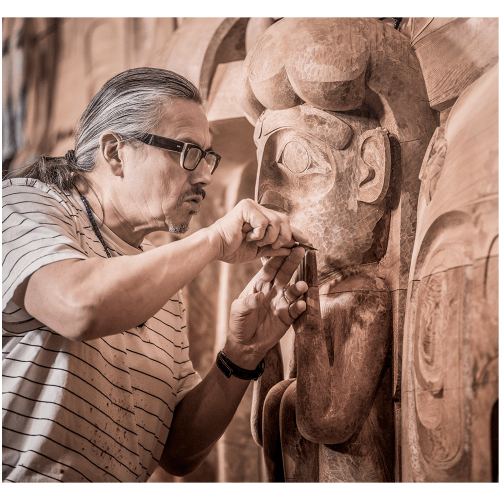
James Hart a été chargé par un collectionneur privé de créer cette sculpture à grande échelle. En 2010, il a commencé à travailler sur ce vaste paravent sculpté dans une serre de son studio à Haida Gwaii. L’œuvre a été transférée à la Bill Reid Gallery à Vancouver en Colombie-Britannique, afin qu'il puisse travailler sous les yeux du public pendant un certain temps, puis elle a été transférée dans le studio de Hart à Musqueam. En 2012, l’œuvre a été à nouveau transférée, cette fois à la Vancouver Art Gallery où, dans une galerie ouverte, Hart et son équipe ont achevé le monumental Dance Screen sous les yeux du public. Hart ne tarit pas d'éloge sur cette expérience unique, qui a non seulement donné au public une rare occasion d'observer un artiste et son équipe au travail, mais qui lui a également permis d'échanger des idées avec d'autres artistes et amateurs d'art.
La sculpture finale en cèdre rouge mesure cinq mètres (16') de large sur trois mètres (11') de haut et pèse environ 1 360 kilogrammes. Elle a été sculptée en sept sections à partir de cèdres rouges carbonisés. Dans les années 1880, un gigantesque incendie de forêt a ravagé Haida Gwaii, la terre natale de Hart. Il a fallu plusieurs années à Hart pour accumuler suffisamment de bois présentant les qualités et les dimensions précises qu'il recherchait pour cette pièce.
Dans la tradition de la danse haïda, la pièce est unique et inhabituelle par sa taille et ses détails. Par ailleurs, elle s'inspire de la grammaire très cohérente de l'ancien langage visuel des Haïdas. Comme toutes les œuvres haïdas, la sculpture utilise un vocabulaire spécifique de formes pour raconter son histoire. Les courbes de S, les ovoïdes, les formes en U et les lignes de forme de cette œuvre sont utilisées selon des règles de composition strictes qui sont transmises de génération en génération. Ces règles s'appliquent indépendamment de la taille et du support du produit fini.
À PROPOS DE L'ARTISTE
Maître sculpteur haïda de renom et chef du clan de l'aigle, James Hart (7idansuu) met son talent artistique au service de l'expression de la vitalité de sa culture, en transposant les enseignements et les pratiques ancestrales dans le présent. Hart a hérité de son talent artistique et de son statut de chef de la lignée ancestrale de sa mère. Son arrière-grand-père était le célèbre sculpteur et chef Charles Edenshaw, dont les œuvres du début du XXe siècle sont présentes dans de nombreuses collections de musées.
Bien qu'il ait été exposé à la sculpture depuis sa plus tendre enfance, Hart s'est sérieusement tourné vers cette forme d'art à la fin des années 1970, lorsqu'il a commencé à étudier avec les célèbres artistes de la côte nord-ouest Robert Davidson et Bill Reid.
Aujourd'hui, les œuvres très recherchées de Hart ont été exposées dans tout le Canada et à l'étranger. Parmi les faits marquants de sa carrière, citons la production du Respect to Bill Reid Memorial Pole pour le musée d'anthropologie et l'université de Colombie-Britannique : la création de la sculpture en bronze The Three Watchmen, installée au Musée des beaux-arts du Canada ; la supervision de la construction de la Haida House dans le Grand Hall du Musée canadien des civilisations (aujourd'hui Musée canadien de l'histoire) ; et la restauration d'un ancien mât totémique haïda pour la Smithsonian Institution à New York. Hart a été fait membre de l'Ordre de la Colombie-Britannique en 2003.
EMBALLAGE
Votre pièce est placée dans un coffret en acrylique et accompagnée d'un certificat sérialisé sous forme de livre. Elle est présentée dans une élégant coffret de collection en bois de noyer canadien portant la marque de la Monnaie royale canadienne. Pour une expédition en toute sécurité, le coffret de collection est placé dans une mallette Pelican Case 1550 étanche à l'eau, à l'écrasement et à la poussière.
Commandez votre pièce dès aujourd'hui !
À PROPOS DE LA MONNAIE ROYALE CANADIENNE
La Monnaie royale canadienne est connue comme l'une des Monnaies les plus réputées au monde. La succursale d'Ottawa de la Monnaie royale a ouvert ses portes en 1908 et a été rebaptisé « La Monnaie royale canadienne » en 1931 lorsque le gouvernement canadien en a pris le contrôle. La Monnaie royale canadienne est réputée pour produire des pièces d'investissement et des lingots en or et en argent d'une qualité et d'une pureté parmi les plus élevées au monde. Ses normes élevées de qualité et d'excellence lui ont permis d'être la première raffinerie à produire des pièces d'investissement en or fin 9999 en 1982 ainsi que la première à atteindre une pureté d'or fin à 99999 en 1999.
