Pièce 2 onces d'argent Red Knight 2022 | Monnaie royale canadienne

Related products
La performance de voltige aérienne du Red Knight est, encore une fois, présentée.
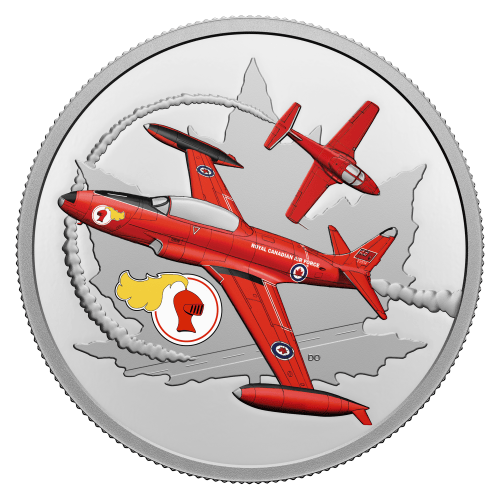
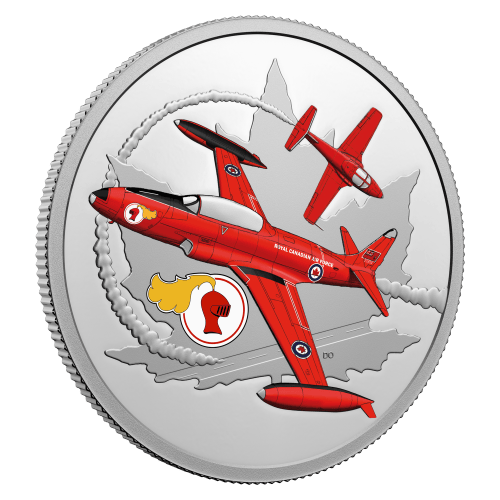
Avant les Snowbirds, il y avait le Red Knight ! De 1958 à 1969, le Red Knight a ravi les spectateurs du Canada et des États-Unis avec des démonstrations de voltige aérienne impressionnantes. Le soliste de la voltige aérienne à réaction de l'Aviation royale du Canada (ARC) était équipé du T-33 Silver Star (ou « T-Bird », CT-133) et, plus tard, du CT-114 Tutor, qui étaient parés d'une couleur vive, le rouge emblématique. Ces avions, ainsi que l'emblème distinctif du casque de chevalier qu'ils portaient, ont été recréés de façon colorée sur cet hommage en argent pur à 99,99 % au légendaire (et très aimé) Red Knight, dont les manœuvres époustouflantes ont inspiré une génération de passionnés de l'art et enrichi le patrimoine aéronautique du Canada.
Célébrez l'histoire légendaire du Red Knight.
CARACTÉRISTIQUES DE LA PIÈCE
- Un hommage au Red Knight. Légende parmi les passionnés d'aviation et les spectateurs, le Red Knight (1958-1969) est surtout connu pour ses incroyables performances en solo dans le ciel des petites et grandes communautés canadiennes et américaines. Cette pièce rend hommage à l'héritage du Red Knight et à sa contribution exceptionnelle à l'ARC et à l'histoire de l'aviation canadienne.
- La première pièce Red Knight de la Monnaie royale canadienne. Les histoires des équipes canadiennes de voltige aérienne, y compris les Snowbirds et les Golden Hawks présentés sur les pièces précédentes, sont liées les uns aux autres. Cette pièce met en lumière le Red Knight, qui n'a jamais été représenté sur une pièce canadienne... jusqu'à maintenant !
- Un mélange de givrages. Les éléments gravés en couleur font forte impression au revers de la pièce, où ils se détachent sur la feuille d'érable et sont entourés d'une finition miroir. Pour une touche dramatique supplémentaire, givrage plus mat distingue les traînées de fumée blanche du Red Knight !
- Chargé d'histoire. Pourquoi deux avions figurent-ils sur cette pièce rendant hommage à l'interprète solitaire de l'ARC ? Les avions contenus au revers de cette pièce représentent les deux types d'appareils qui ont servi de monture au Red Knight : le T-33 de 1958 à 1968, et le Tutor en 1968 et 1969. La feuille d'érable en toile de fond est également historique : elle est basée sur la cocarde de l'ARC d'avant 1965, que l'on peut voir sur le fuselage et les ailes du T-33 sur ce motif.
- Un faible tirage. Si vous avez raté les pièces Snowbirds et Avro Arrow 2021 de la Monnaie royale canadienne, ou si vous êtes à la recherche d'une autre pièce sur le thème de l'aviation à ajouter à votre collection, voici la pièce à avoir en 2022 ! Mais le tirage est limité à seulement 6 500 exemplaires, donc n'attendez pas et commandez la aujourd’hui !
Un certificat numéroté inclus. La Monnaie royale canadienne garantit l'authenticité de toutes ses pièces de collection.
- Aucune TPS ni TVH.
DES COULEURS VINTAGE
Les couleurs vives et les marques du Red Knight le rendaient facile à repérer, et sa couleur rouge distinctive a été recréée sur cette pièce de couleur sélective qui a été fabriquée sur 2 onces d'argent fin à 99,99 %.
COMPREND L'EMBLÈME DU RED KNIGHT
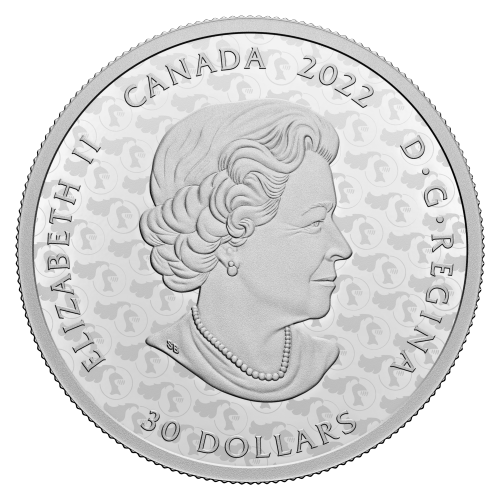
L'emblème de la Red Knight est également présent sur cette pièce ! Le casque Red Knight avec sa plume dorée était affiché sur le nez de l'avion de 1961 à 1969. L'emblème est également subtilement gravé au laser sur l'avers de la pièce, où cet élément répétitif accroche la lumière lorsque la pièce est inclinée.
LE SAVIEZ-VOUS ?
- Quatre avions T-33 ont fait partie du programme Red Knight de 1958 à 1968. L'un d'eux, portant le numéro de série 21574 de l'ARC (1961 à 1964), est exposé au Musée de l'aviation et de l'espace du Canada à Ottawa, en Ontario, où vous pouvez voir de près sa peinture rouge vif et l'emblème du Chevalier rouge sur son nez - et emblème figure également sur cette pièce ! Un autre des Red Knights originaux, portant le numéro de série 21630, est exposé à Saskatoon et il existe plusieurs autres hommages au Red Knight à travers le Canada. Le dernier Tutor à avoir servi en tant que chevalier rouge, numéro de série 26153 de l'ARC, est maintenant exposé dans ses couleurs originales de Golden Centennaires au Musée de la BFC Borden. Après sa tournée du Red Knight, ce même Tutor a servi pendant six ans au sein des Snowbirds, notamment en tant que Snowbird 1 en 1975-1976.
- Quelques variantes de la palette de couleurs standard du Red Knight ont été introduites au fil des ans. Par example, le Tutor a été peint en rouge vermillion (au lieu du rouge vif original) et une ligne blanche s'étendait du nez à la queue. Quant à l'insigne du Red Knight, il s'agissait d'une silhouette noire d'un casque de chevalier en 1959. La version plus colorée, reproduite au revers de cette pièce, a été introduite en 1961 et a servi d'emblème pour le reste du programme Red Knight.
- Le CT-114 Tutor est le même type d'appareil qui est actuellement utilisé par le 431e Escadron de démonstration aérienne des Snowbirds des Forces canadiennes.
- Le Red Knight a fait partie des intronisés de 2020 au Temple de la renommée de l'aviation du Canada (CAHE) en tant que récipiendaire du prix d'excellence Belt of Orion, un honneur bien mérité.
LE MOTIF & L'ARTISTE
Le revers de chaque pièce a été conçu par l'artiste David Oram et rend hommage au Chevalier rouge, le célèbre voltigeur du Commandement de l’entraînement de l'Aviation royale du Canada de 1958 à 1969. La liaison historique a été assurée par les auteurs J.C. Corrigan et D.V. Dempsey. Pour représenter cette période, le T-33 Silver Star construit par Canadair est représenté en train d'effectuer une manœuvre aux côtés de son futur remplaçant, le CT-114 Tutor conçu et construit par Canadair (en arrière-plan). Accompagnés de l'emblème rouge, or et blanc du Chevalier rouge, les deux aéronefs sont peints dans leur livrée rouge distinctive des années 1960, avec en toile de fond la feuille d'érable de la cocarde de l'ARC (avant 1965). L'avers présente l'emblème répété du Red Knight gravé au laser et l'effigie de la reine Elizabeth II par Susanna Blunt.
À PROPOS DU RED KNIGHT
Précurseur des Snowbirds des Forces canadiennes, le Red Knight est né à Trenton, en Ontario, et a été actif de 1958 à 1969. Bien qu'il n'ait été autorisé à l'origine à participer qu'à trois spectacles aériens, le soliste du Commandement de l’entraînement de l'Aviation royale du Canada s'est avéré très populaire auprès des spectateurs et a participé à plus de 600 spectacles aériens au cours de ses 12 années d'existence. Sa capacité d'effectuer des manœuvres dans les limites d'un aérodrome le rendait bien adapté aux spectacles aériens des petites communautés et des sites qui ne pouvaient pas accueillir de plus grandes équipes de démonstration.
Les trois premières années, le Red Knight se composait d'un avion, d'un pilote et d'un technicien de soutien. Par la suite, un total de 17 pilotes et deux types d'aéronefs - le T-33 de 1958 à la mi-1968 et le Tutor en 1968 et 1969 - ont endossé le rôle de Chevalier rouge. La base d'opérations a déménagé à la station de l'ARC de Saskatoon en 1959, à la station de l'ARC de Portage la Prairie en 1961 et à la station de l'ARC de Moose Jaw en 1904 avant de revenir à la BFC Portage la Prairie en 1967. À la fin de cette saison de spectacles aériens, le Red Knight a reçu la Médaille du Centenaire pour ses « précieux services rendus à la nation » - après avoir effectué plus de 100 représentations, y compris des défilés aériens aux côtés des Centenaires d'or des Forces armées canadiennes pendant l'Expo 67.
Des réductions budgétaires et un accident mortel ont entraîné l'annulation prématurée du programme au début de 1970. Mais le Red Knight occupera toujours une place spéciale dans l'histoire de l'aviation canadienne, car il s'agissait d'un appareil prolifique et de l'un des spectacles de voltige militaire les plus anciens. En fait, le nombre total de spectacles qu'il a présentés n'est surpassé que par les Snowbirds d'aujourd'hui et les spectacles de voltige en solo des CE-18 qui ont lieu respectivement depuis 1971 et 1983.
« L'un de mes plus beaux souvenirs d'enfance est d'avoir assisté à des meetings aériens et d'avoir vu les différents avions qui se produisaient devant nous et des milliers d'autres spectateurs. Bien que je n'aie jamais vu un Red Knight en action, ces premières experiences m'ont inspiré le dessin de ma pièce. Je voulais vraiment que l'avion se distingue par sa peinture rouge brillante, tout en veillant à ce que l'insigne du Red Knight soit clairement visible. Il était fascinant d'en apprendre davantage sur l'avion et l'histoire du Red Knight tout en développant ce dessin ! » David Oram, artiste
« Je n'avais jamais entendu parler du Red Knight auparavant ! Dès que j'ai appris l'existence du Red Knight, j'ai été immédiatement intriguée et impatiente d'en savoir plus. Étant une personne naturellement attirée par les sujets vintage, l'histoire et l'imagerie du Red Knight m'ont captivé. C'était un véritable honneur de transposer cette histoire sur une pièce de monnaie et je pense que l'équipe a fait un excellent travail pour la raconter ! » Matt Eggink, chef de produit
« Tous les pilotes du Red Knight étaient des instructeurs de vol. Les quarante heures de pratique réglementaires pour atteindre le niveau maximal de compétence devaient être réalisées en dehors des heures de travail ou pendant les fins de semaine. Le fait d’être sélectionné pour piloter un Red Knight demandait un engagement de deux ans : la première année comme pilote suppléant, à piloter l'avion de remplacement, à donner son avis ou à assurer la relève du Red Knight lorsque le pilote était malade ou en situation de conflits d'horaires. Ces petites équipes, composées de deux à cinq hommes, étaient très peu soutenues. Cette pièce est un hommage remarquable à ces pilotes, à leur équipage et aux spectacles acrobatiques enlevants effectués partout où ils allaient. » John Charles Corrigan, auteur de « The Red Knight »
« Les spectacles solos du Red Knight ont dure le temps de deux des plus célèbres équipes acrobatiques du Canada, les Golden Hawks de l'ARC (1959-1963) et les Golden Centennaires des Forces armées canadiennes (1967). Pendant sa carrière de 12 ans, le Red Knight a été une source d'inspiration pour des millions de spectateurs et son schéma de peinture et les marquages extérieurs agissaient comme un aimant sur les petits et les grands. Beaucoup de jeunes aviateurs comme moi se sont émerveillés du Red Knight et ont fini par joindre les Snowbirds ou par voler comme pilotes de démonstration des CF-18, pour transmettre le riche héritage des spectacles acrobatiques aériens du Canada. Il allait donc de soi de voir le Red Knight être intronisé au Panthéon de l'Aviation du Canada, et de lui rendre hommage grâce à cette pièce commémorative. » D.V. Dempsey, CD, Lieutenant-Colonel (à la retraite) et auteur de « Canada's Airshow Team Heritage »
EMBALLAGE
Chaque pièce est encapsulée et présentée dans un boîtier à double coque orné du logo de la Monnaie royale canadienne, assorti d'une boîte de protection noire.
À PROPOS DE LA MONNAIE ROYALE CANADIENNE
La Monnaie royale canadienne est connue pour être l'une des monnaies les plus réputées au monde. La succursale d'Ottawa de la Monnaie royale a ouvert ses portes en 1908 et a été rebaptisée Monnaie royale canadienne en 1931 lorsque le contrôle a été transféré au gouvernement canadien. La Monnaie royale canadienne est réputée pour produire des pièces et des lingots d'or et d'argent d'une qualité et d'une pureté parmi les plus élevées au monde. Ses normes élevées en matière d'excellence et de qualité lui ont permis d'être la première raffinerie à fabriquer des pièces d'investissement en or d'une pureté de 9999 en 1982, ainsi que la première à atteindre une pureté de 99999 en 1998.
