Pièce 1 once d'or 99999 La ruée vers l'or de Klondike 2023 | Monnaie royale canadienne
Related products
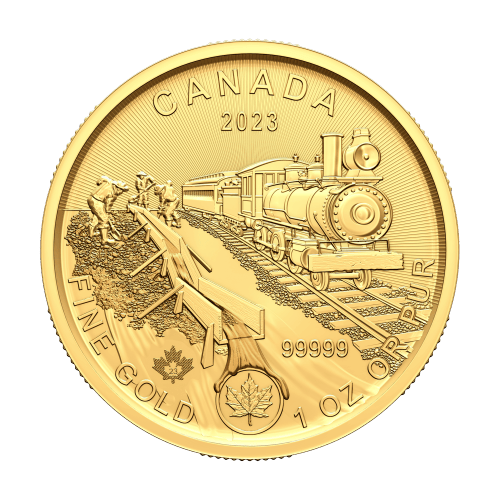
Pendant la ruée vers l'or du Klondike (1896-1899), la poursuite de la prospection et l'afflux de chercheurs d'or à destination de la ville-champignon de Dawson City ont alimenté la demande en moyens de transport. La plupart d'entre eux effectuent le périlleux voyage à pied ou en bateau, mais en 1898, les travaux de construction d'une ligne de chemin de fer à voie étroite débutent et constituent un lien vital avec la côte - et le reste du monde.
CARACTÉRISTIQUES DE LA PIÈCE
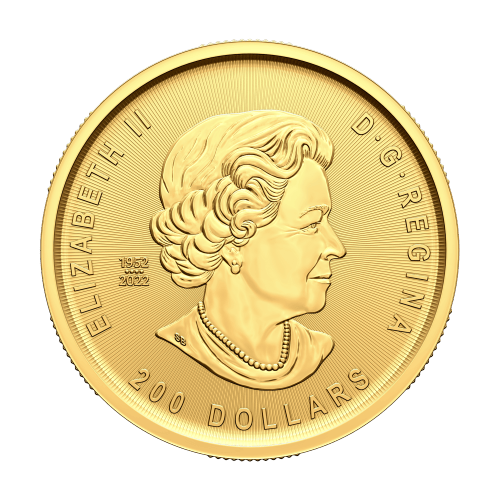
- Les caractéristiques de sécurité les plus modernes comprennent des lignes radiales précises, la technologie ADN pour produits d'investissement et une marque de sécurité anti-contrefaçon micro-gravée au laser : une feuille d'érable texturée avec le chiffre « 23 » (visible à la loupe) pour indiquer l'année d'émission de la pièce.
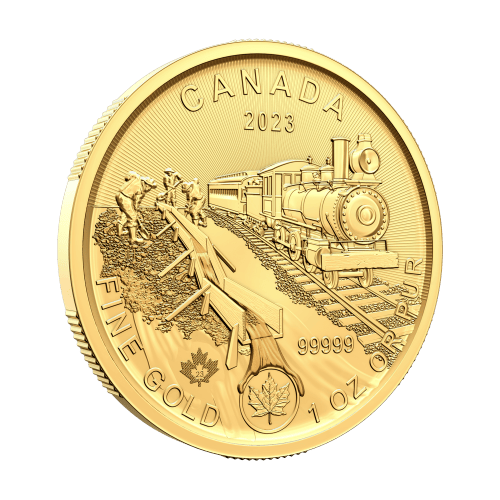
- Réalisé de main de maître par les graveurs de la Monnaie royale canadienne, le revers combine deux scènes : une représentation d'une locomotive comparable à celle qu'utilisait le chemin de fer de White Pass and Yukon Route our transporter les passagers et le ravitaillement dans le Yukon au début des années 1900, et une vue de prospecteurs utilisant des boîtes à vannes pour récupérer l'or placérien.
- Troisième d'une série de pièces d'investissement en or pur à 99,999 % (cinq neuf) commémorant le 125e anniversaire de la ruée vers l'or du Klondike (1896-1899), un chapitre important de l'histoire du Canada.
- Il s'agit d'une acquisition intéressante tant pour les nouveaux acheteurs de métaux précieux que pour les investisseurs à long terme.
Achevée en 1900, le chemin de fer White Pass & Yukon Route (WP&YR) est une merveille d'ingénierie qui s'étend sur 175 kilomètres, de Skagway, en Alaska, à Whitehorse, au Yukon. Il a fallu une main-d’œuvre totale de 35 000 hommes pour surmonter certains des terrains les plus difficiles et achever le « chemin de fer panoramique du monde », le chemin de fer en pente le plus raide du Canada.
En tant que transporteur de fret, de minerai et de passagers, la WP&YR a considérablement raccourci les trajets à l'intérieur et à l'extérieur du Yukon et a facilité la circulation des marchandises. Le fret pouvait être déchargé à Whitehorse puis transporté par ferry sur le fleuve Yukon jusqu'à Dawson City, tandis que l'or pouvait être chargé sur des barges et envoyé en amont du fleuve jusqu'à Whitehorse, où il était chargé sur les trains de la WP&YR à destination de la côte.
Le WP&YR a été rouvert en tant qu'attraction touristique en 1988 et des excursions continuent d'être organisées sur la partie inférieure de la ligne originale. C'est un rappel durable de l'époque de la ruée vers l'or du Klondike, lorsque la recherche fiévreuse de richesse a ouvert la voie à l’entrée du Yukon dans la Confédération et a fait du Canada l'un des principaux producteurs d'or au monde : mais la ruée vers l'or a aussi irrévocablement modifié le paysage et la vie des peuples indigènes qui y vivaient. L'héritage de la ruée vers l'or du Klondike est complexe et ses effets, tant positifs que négatifs, se font encore sentir aujourd'hui.
À PROPOS DE LA MONNAIE ROYALE CANADIENNE
La Monnaie royale canadienne est connue pour être l'une des monnaies les plus réputées au monde. La succursale d'Ottawa de la Monnaie royale a ouvert ses portes en 1908 et a été rebaptisée Monnaie royale canadienne en 1931 lorsque le contrôle a été transféré au gouvernement canadien. La Monnaie royale canadienne est réputée pour produire des pièces et des lingots d'or et d'argent d'une qualité et d'une pureté parmi les plus élevées au monde. Ses normes élevées en matière d'excellence et de qualité lui ont permis d'être la première raffinerie à fabriquer des pièces d'investissement en or d'une pureté de 9999 en 1982, ainsi que la première à atteindre une pureté de 99999 en 1998.
