3/4 oz 2025 Tall Ships: Three-Masted Schooner Colourized Silver Coin | Royal Canadian Mint
Related products
Cette goélette de l’âge de la voile au Canada prend vie en couleur
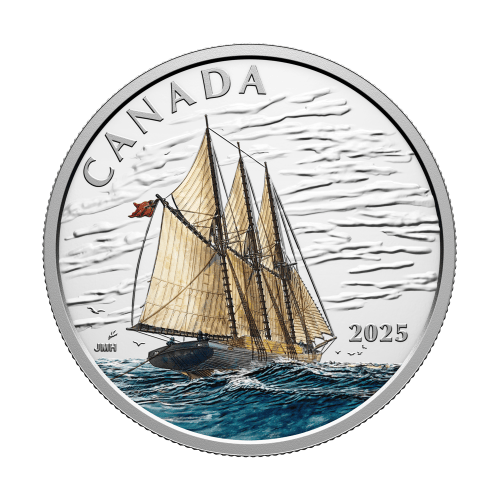
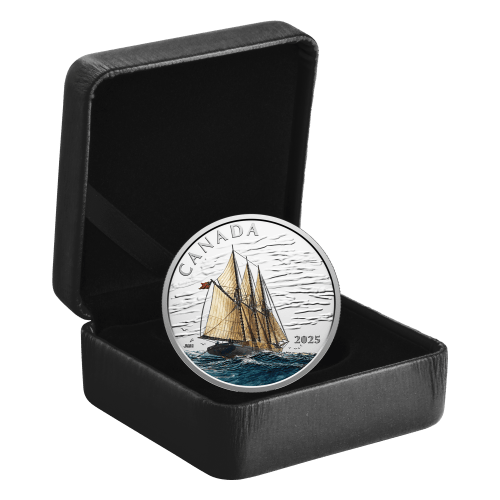
Merveilles de l’ingénierie nautique, les grands voiliers sont des navires fascinants, et cette goélette à trois mâts (ou « terne »), représentée sur cette pièce en argent pur à 99,99 % rehaussée de couleurs sélectives, possède une majesté qui lui est propre. Comme on peut le voir au revers de votre pièce, ce type de goélette ne porte pas de voiles carrées supérieures ; ses voiles sont gréées dans l’axe longitudinal, ce qui permet une meilleure performance au vent. Entre 1880 et 1920, des centaines de goélettes ternes ont été lancées depuis les chantiers navals de l’Atlantique canadien. Dotées d’une grande capacité de charge et nécessitant peu d’équipage, les ternes ont remplacé les navires à gréement carré comme pilier du commerce côtier à la fin du XIXᵉ siècle, devenant alors l’équivalent à voile des camions de transport d’aujourd’hui.
Ajoutez ce trois-mâts coloré à votre collection.
CARACTÉRISTIQUES DE LA PIÈCE
- Retour à l’âge de la voile au Canada. Célébrez l’héritage canadien en construction navale ! Parmi les nombreux grands voiliers qui ont valu une renommée internationale aux chantiers navals du Canada à l’époque de la voile, la goélette à trois mâts (ou goélette terne) prend vie sur cette pièce colorée en argent pur à 99,99 %.
- Un souci du détail remarquable. Des cordages jusqu’au loch à hélice remorqué à l’arrière, ce portrait fidèle à l’histoire saisit toute l’élégance de la goélette à trois mâts, un navire de charge couramment utilisé pour le cabotage à la fin du XIXᵉ siècle et au début du XXᵉ siècle.
- L’un des Grands voiliers de la MRC, maintenant en couleur. Voici une version en argent fin rehaussée de couleurs sélectives de la pièce n°4 de notre série annuelle de pièces en or pur à 99,99 % consacrée aux Grands voiliers. Le revers coloré de cette pièce en fait un magnifique complément à la version en or, et grâce à un tirage plus élevé, un plus grand nombre de collectionneurs peuvent intégrer cette page de l’histoire maritime du Canada à leur collection.
- Un objet de collection en édition limitée. Seulement 15 000 pièces sont offertes aux collectionneurs dans le monde entier.
- Un certificat numéroté inclus. La Monnaie royale canadienne garantit l'authenticité de toutes ses pièces de collection.
- Aucune TPS ni TVH.
*EMBALLAGE
La pièce est encapsulée et présentée dans un boîtier à double coque noir orné du logo de la Monnaie royale canadienne, assorti d’une boîte protectrice noire.
UNE COULEUR SÉLECTIVE
Les eaux, le navire et sa cargaison, ainsi que le pavillon maritime, sont rehaussés de couleurs vives au revers de votre pièce.
LE SAVIEZ-VOUS ?
Avez-vous remarqué le drapeau rouge au revers de votre pièce ? Il s’agit de l’Enseigne rouge canadienne, le pavillon maritime arboré par les navires canadiens dès les années 1890. Il a également servi de drapeau de facto du Canada après la Confédération. Combinant l’Union Jack avec différentes versions de l’écu du Canada, l’Enseigne rouge canadienne a été modifiée à plusieurs reprises, mais n’a jamais été officiellement adoptée comme drapeau national. Elle a finalement été remplacée par le drapeau à la feuille d’érable en 1965.
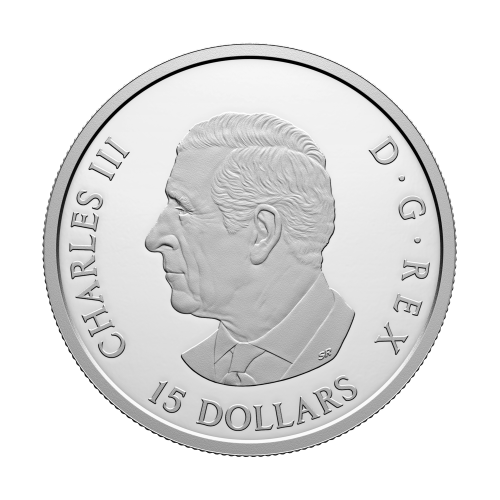
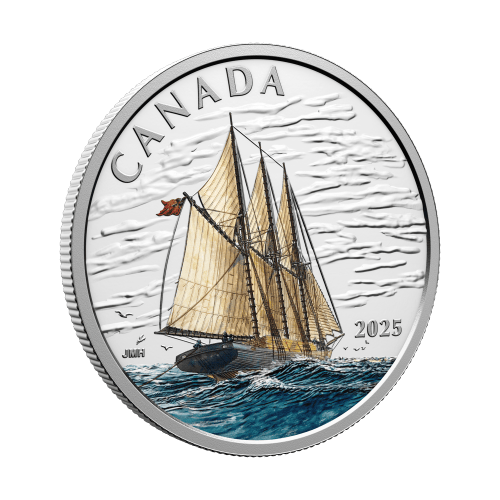
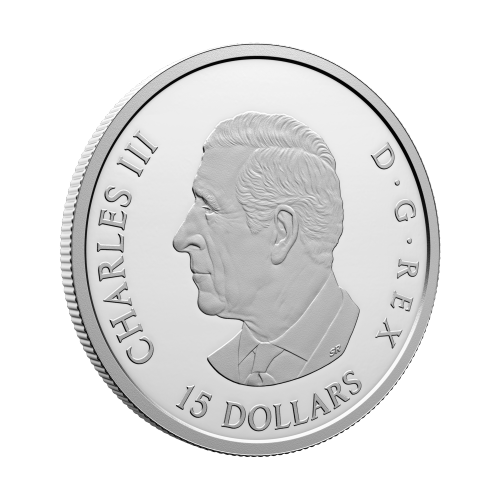
Rehaussé de couleurs sélectives, le motif au revers, signé par l’artiste maritime canadien John M. Horton, présente une vue de trois quarts tribord d’une goélette à trois mâts toutes voiles dehors, voguant au près bon plein par une brise soutenue, la coque s’inclinant à bâbord alors que le côté tribord se soulève. Un chargement complet de bois est arrimé sur le pont de ce caboteur, tandis qu’un loch à hélice est remorqué à l’arrière pour mesurer la vitesse et la distance parcourue. L’avers présente l’effigie de Sa Majesté le roi Charles III, réalisée par l’artiste canadien Steven Rosati.
À PROPOS DE LA MONNAIE ROYALE CANADIENNE
La Monnaie royale canadienne est connue pour être l'une des monnaies les plus réputées au monde. La succursale d'Ottawa de la Monnaie royale a ouvert ses portes en 1908 et a été rebaptisée Monnaie royale canadienne en 1931 lorsque le contrôle a été transféré au gouvernement canadien. Ses normes élevées d'excellence et de qualité lui ont permis d'être la première raffinerie à fabriquer des pièces d'investissement en or d'une pureté de 9999 en 1982, ainsi que la première à atteindre une pureté d'or de 99999 en 1998.
