1878-1904 Morgan Silver Dollar Average Circulation Silver Coin | United States Mint
Related products
Secure your 1878-1904 Morgan Silver Dollar Average Circulation Silver Coin and grow your wealth today!
COIN HIGHLIGHTS
- Ships individually in protective packaging
- Consisting of 0.7734 oz of 900 Fine Silver
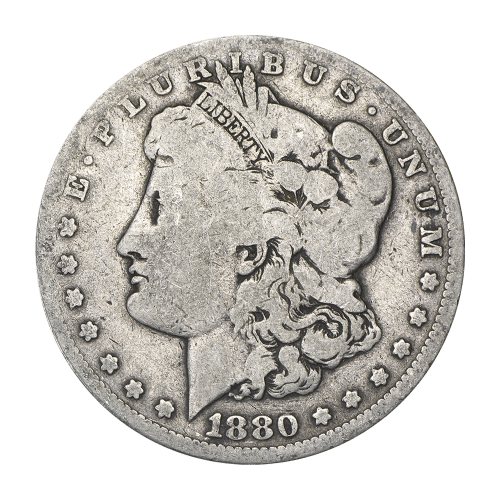
- Obverse: Features a depiction of a left facing portrait of Lady Liberty encircled by 13 stars along with the inscription "E. PLURIBUS UNUM"
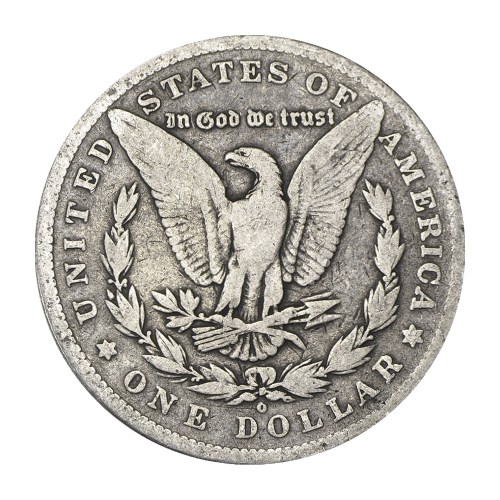
- Reverse: Features the engraving of a bald eagle clutching a bundle of arrows and an olive branch, the name of the country of issue, the legal tender value of the coin and the inscription "IN GOD WE TRUST"
The Morgan dollar was created in response to the passage of the Bland-Allison Act of 1878. After the five year depression following the Panic of 1873, so-called "Silverites" proposed a bimetallic standard that would see silver coined into dollars at the former gold/silver ratio of 16:1. The Silverites felt that this act would help to re-inflate the dollar after the Panic of 1873.
George T. Morgan, an assistant engraver at the Philidelphia Mint produced the winning design for the dollar, hence it is referred to by his name. Anna Willess Williams modeled for Morgan as Lady Liberty. He said that her profile was the most perfect he had ever seen.
The Morgan silver dollar was minted from 1878 to 1904, with a one year return to production in 1921. The Morgan dollars were produced with ninety percent silver and ten precent copper in order to conform with the coinage act of 1837. In 1962 a silver certificate was partially redeemed for an uncirculated Morgan dollar, which set off a firestorm of interest in redeeming silver certificates to the US Treasury. Demand was huge, with some in lines pushing wheelbarrows. Several million uncirculated Morgan and Peace dollars were eventually discovered in vaults and sold off to the public.
ABOUT THE UNITED STATES MINT
Established in 1792 as the first national mint in the United States, the United States Mint is a bureau of the Department of the Treasury responsible for official legal tender coinage production. The United States Mint has a mission to serve Americans as the sole manufacturer and distributor of circulating currency coins and other official American coinage. The U.S. mint also produces commemorative coins for collectors, silver and gold bullion coins for investors (such as the popular Eagle and Buffalo series), as well as Congressional Medals.
